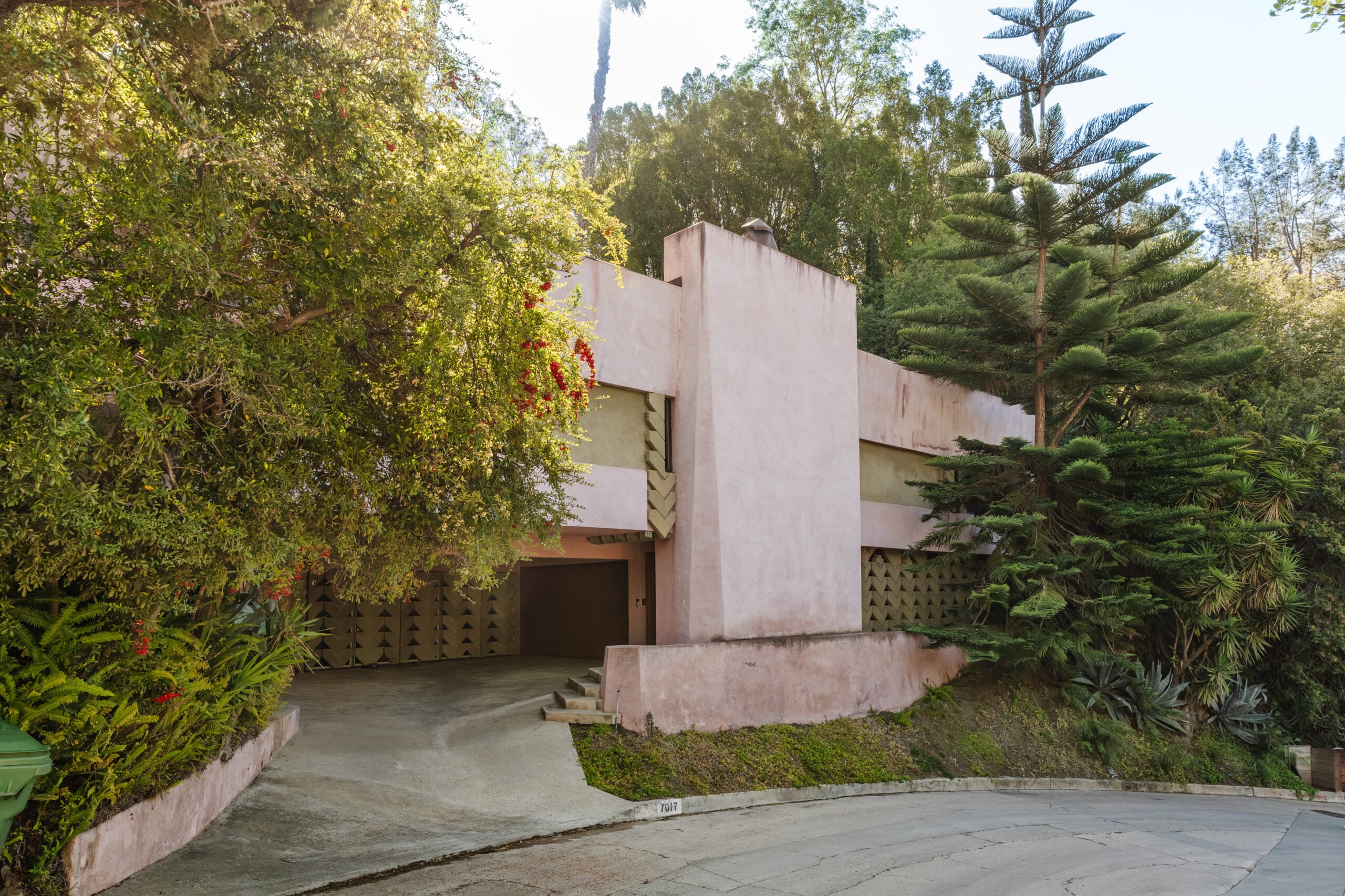
David Lynch’s Hollywood Hills Estate Sells For $13 Million
The legendary Hollywood Hills estate of filmmaker David Lynch has sold for $13 million, just over a year after his death at age 78.
Lynch, the visionary director behind Eraserhead, Blue Velvet, and Twin Peaks, acquired the core of the property, the Beverly Johnson House, in 1987 for $560,000.
Over the next three decades, he transformed the pink-hued home into a massive compound of seven structures, serving as both his home and his creative workplace.
Property Highlights
Price: $13 million
Location: Hollywood Hills, Los Angeles
Size: 11,000 square feet on 2.3 acres
Bedrooms: 10
Bathrooms: 11
Notable Features: Beverly Johnson House designed by Lloyd Wright, expansions by Eric Lloyd Wright, editing suite and screening room, pool and pool house, two-story guest house, production company headquarters
For more information about this sale, reach out to the seller and buyer’s agent, Marc Silver of The Agency at marc@hellomarcsilver.com.
Inside The Beverly Johnson House
Characterized by bold geometry, walls of glass, and fluid transitions between indoors and out, the Beverly Johnson House was designed in 1963 by Lloyd Wright.
Living Room
One of the first spaces you’ll find inside the house is the main living room, a dramatic gathering area that highlights the property’s midcentury design.
A soaring vaulted ceiling with exposed wood beams stretches overhead, while a wall of glass doors and clerestory windows floods the room with natural light.
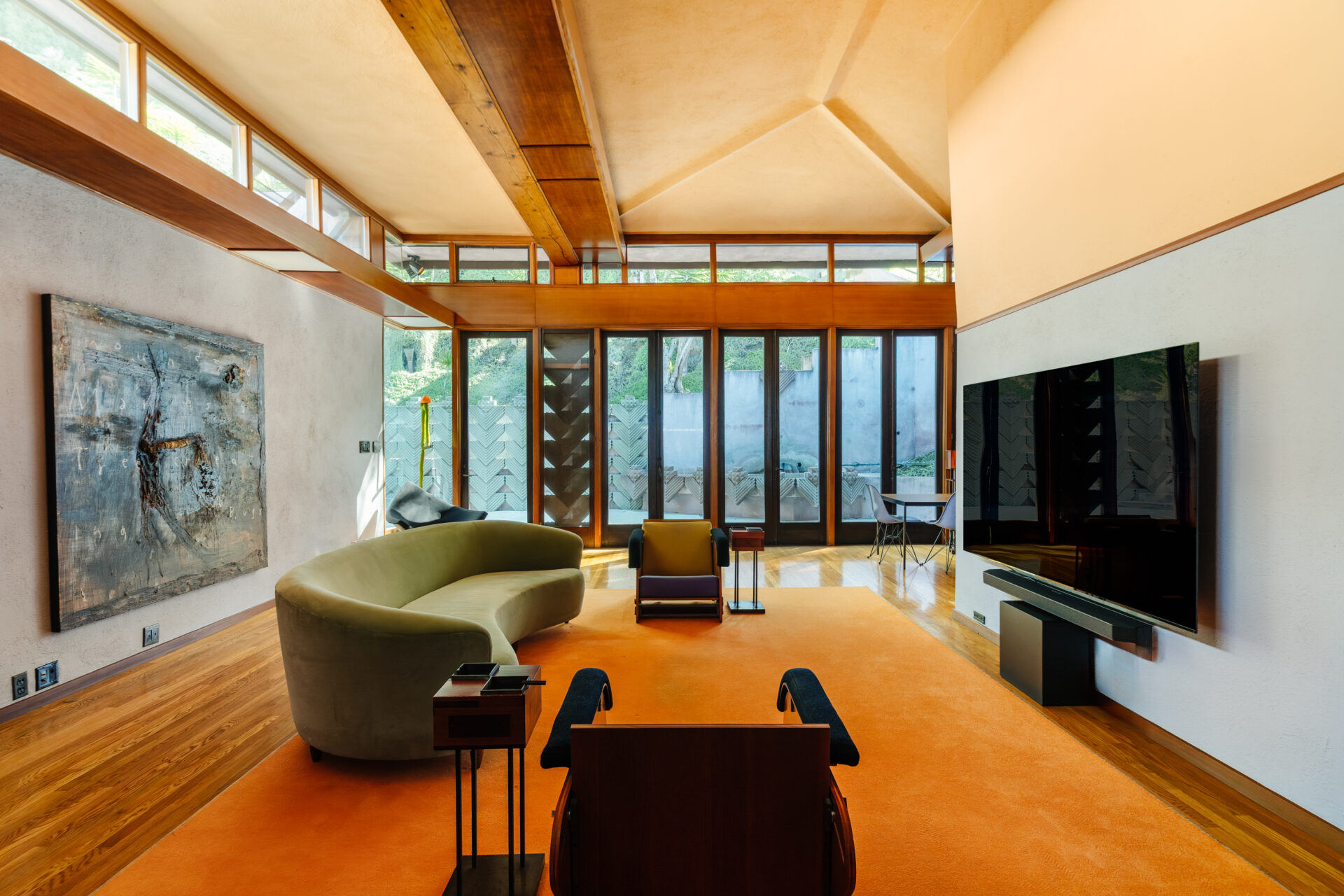
The seating area is arranged across a large orange rug, with a curved green sofa and a pair of sculptural wood-framed lounge chairs facing a mounted TV.
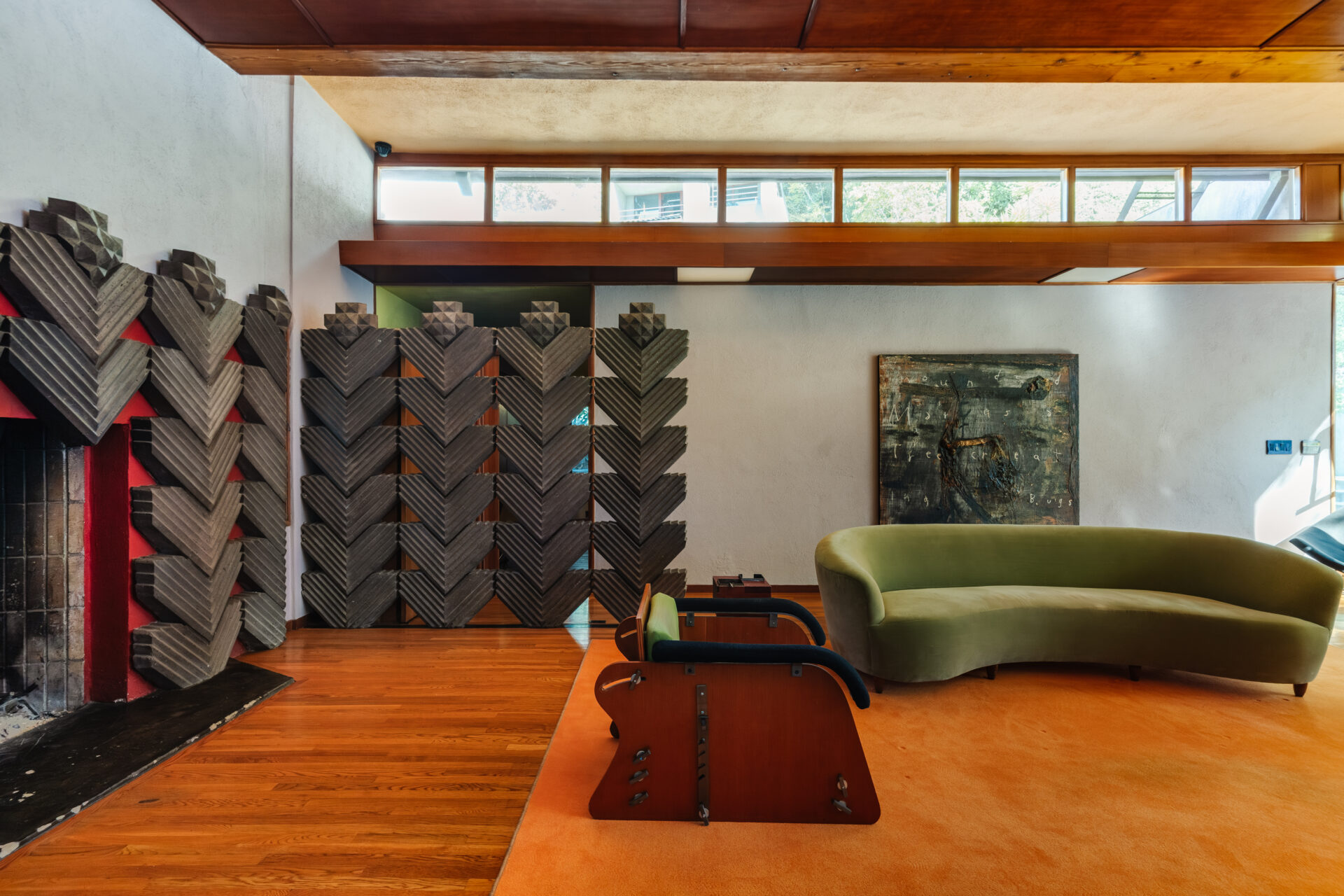
At the far end of the room, the home’s distinctive geometric tile fireplace acts as a visual centerpiece. Its layered chevron surround introduces bold texture and pattern, reinforcing the artistic character of the house.
Kitchen
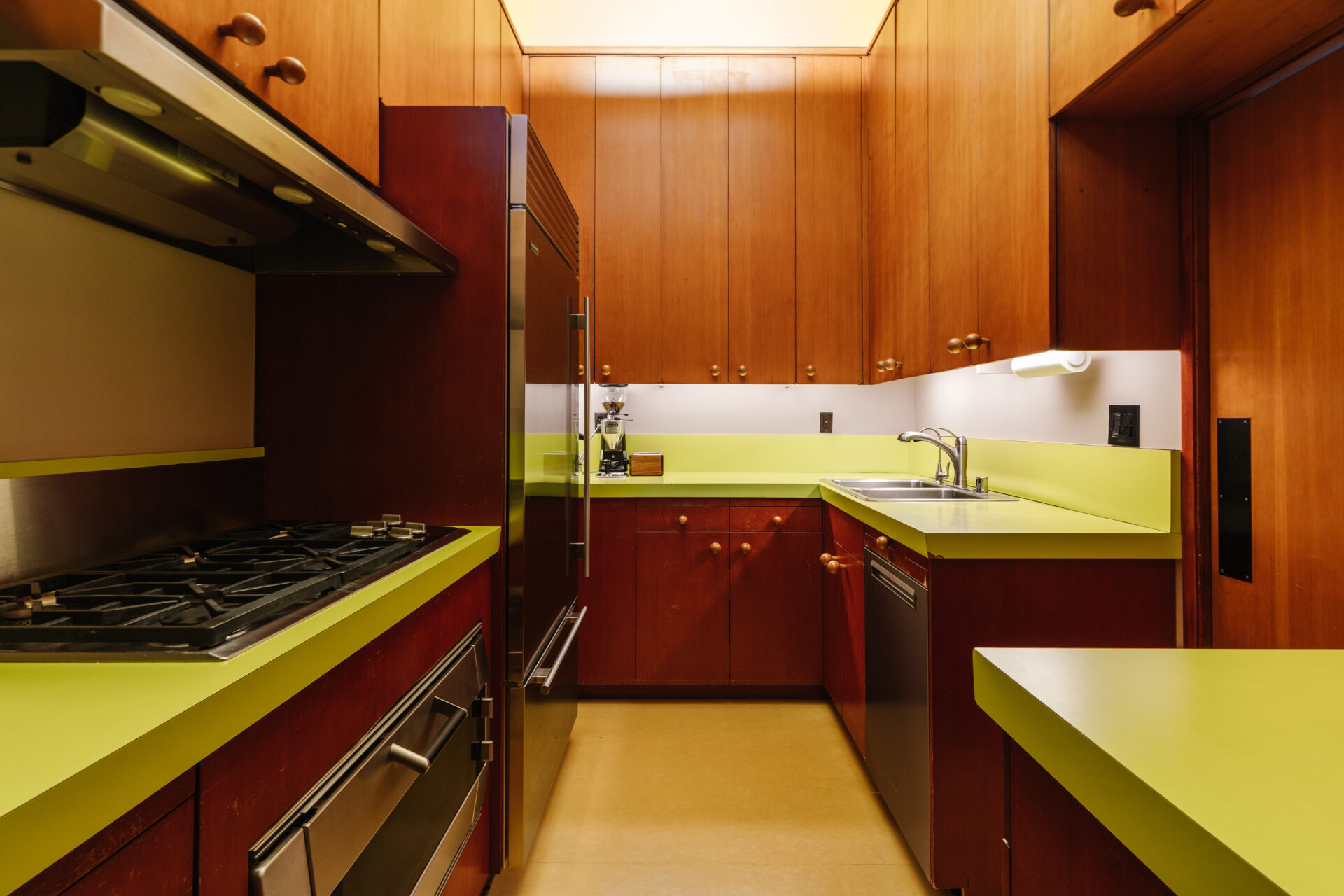
Around the corner, the kitchen features lime green countertops that pop vividly against the rich brown oak cabinets lining the walls.
The combination creates a striking contrast, blending earthy warmth with a splash of color to keep things minimal yet filled with personality.
Pool and Pool House
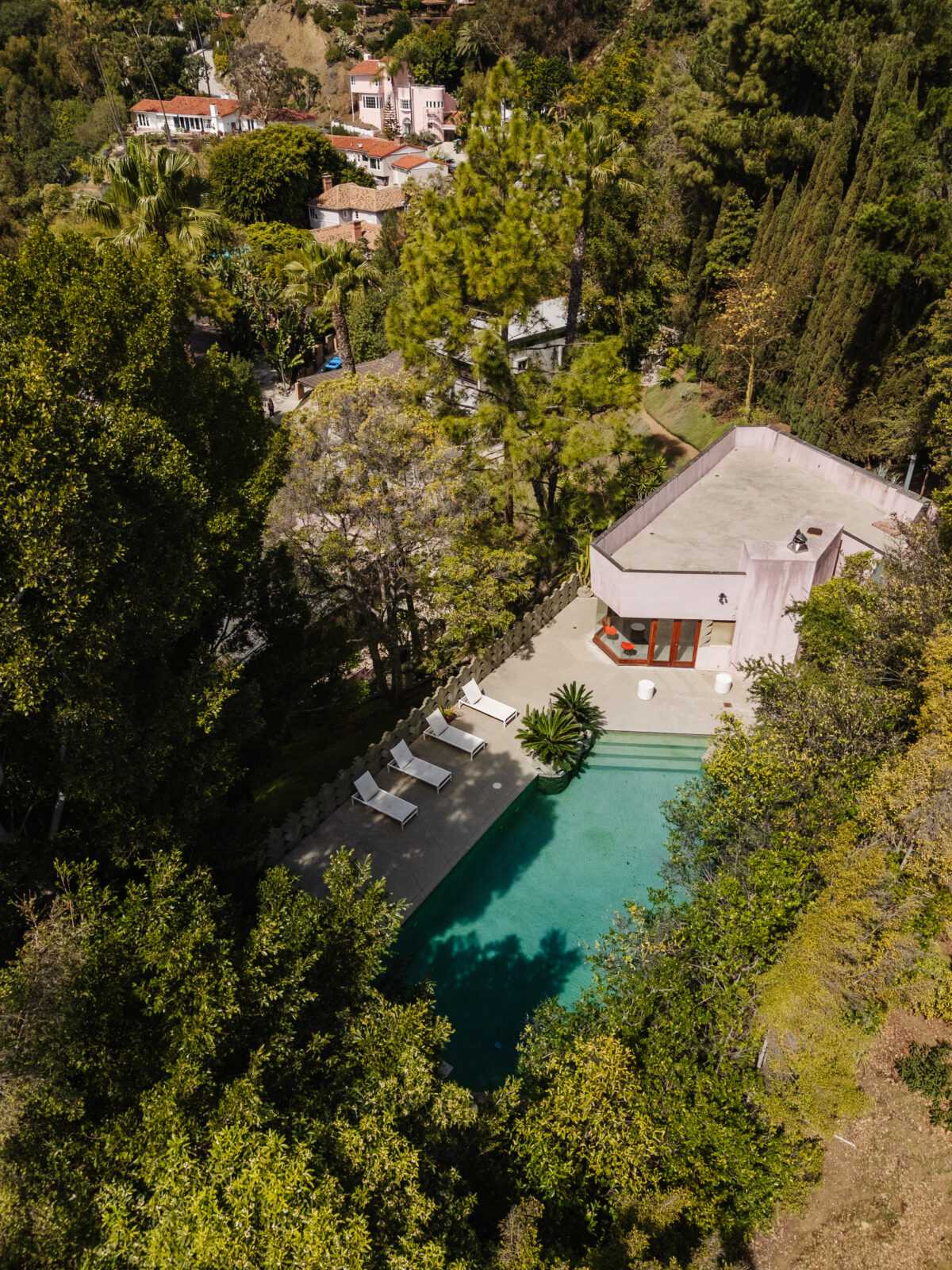
In 1991, Lynch brought in Eric Lloyd Wright, son of Lloyd Wright, to design a pool and pool house high on the hillside, extending the property even farther.
Pool House
Inside the pool house, the design continues the property’s bold midcentury-inspired style. A sculptural fireplace framed again by geometric tilework is set against warm red plaster walls and a textured ceiling that adds depth overhead.
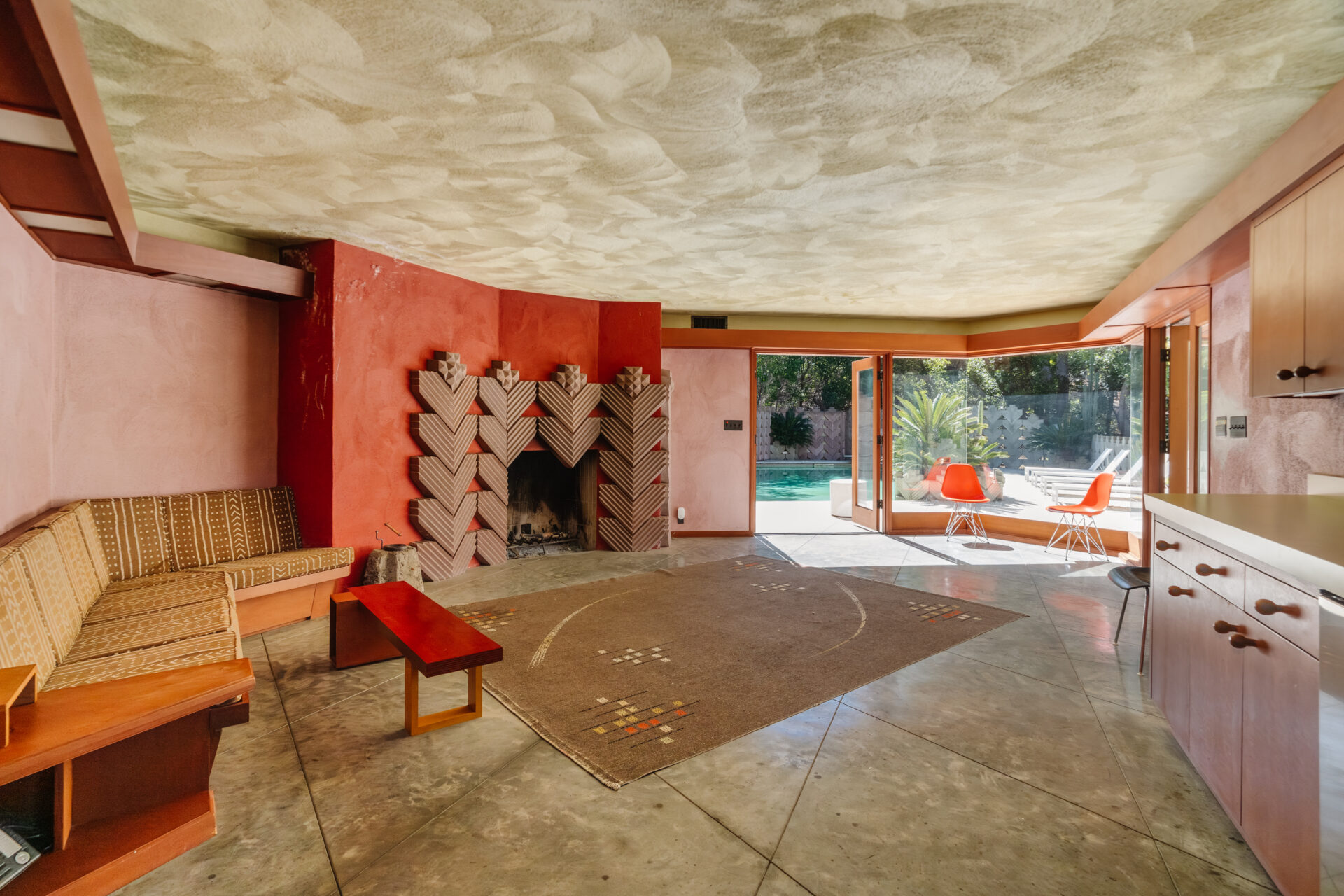
Built-in seating lines one side of the space, while wood cabinetry and a compact kitchenette make the room functional for poolside gatherings, with large glass doors opening directly to the patio.
Pool
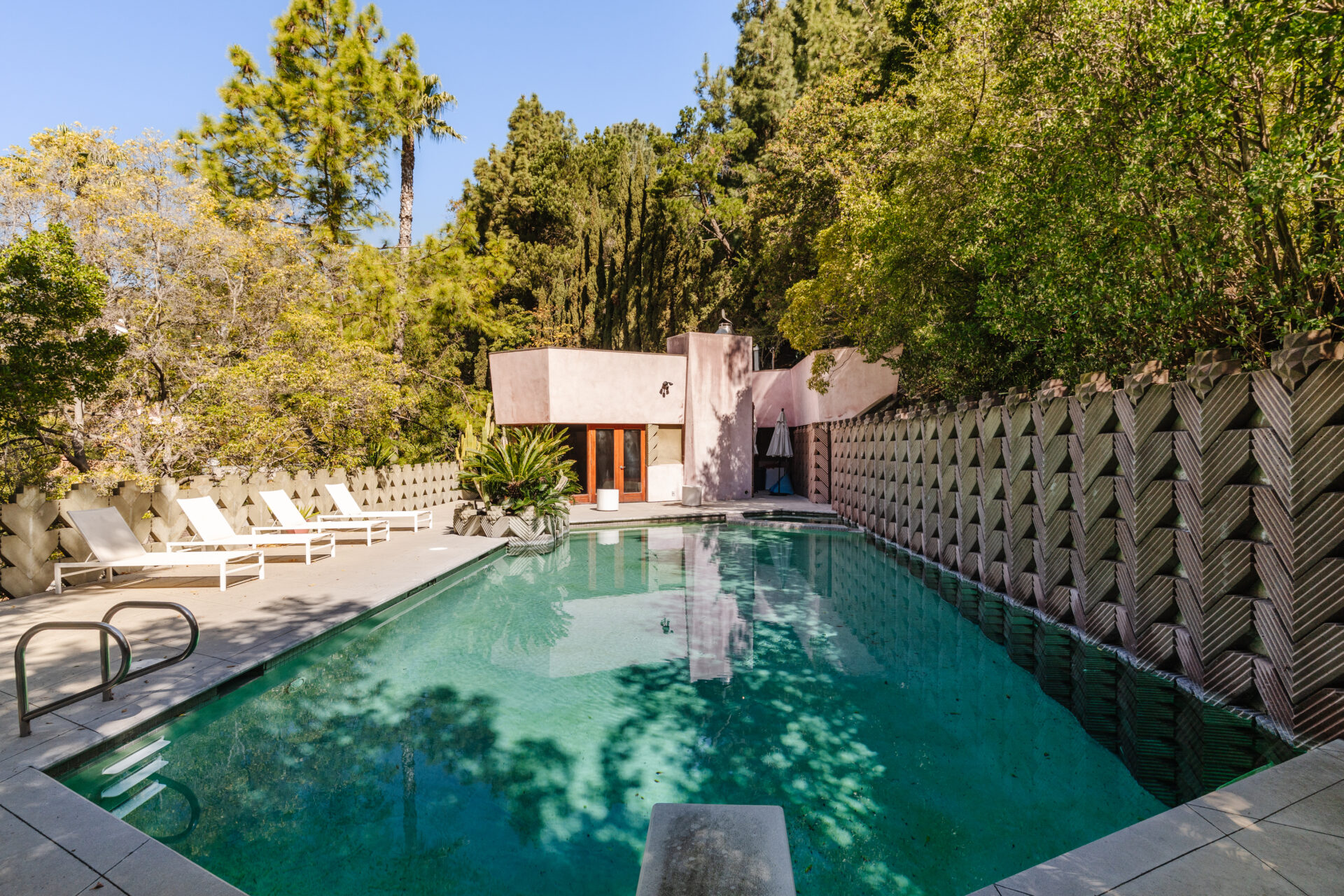
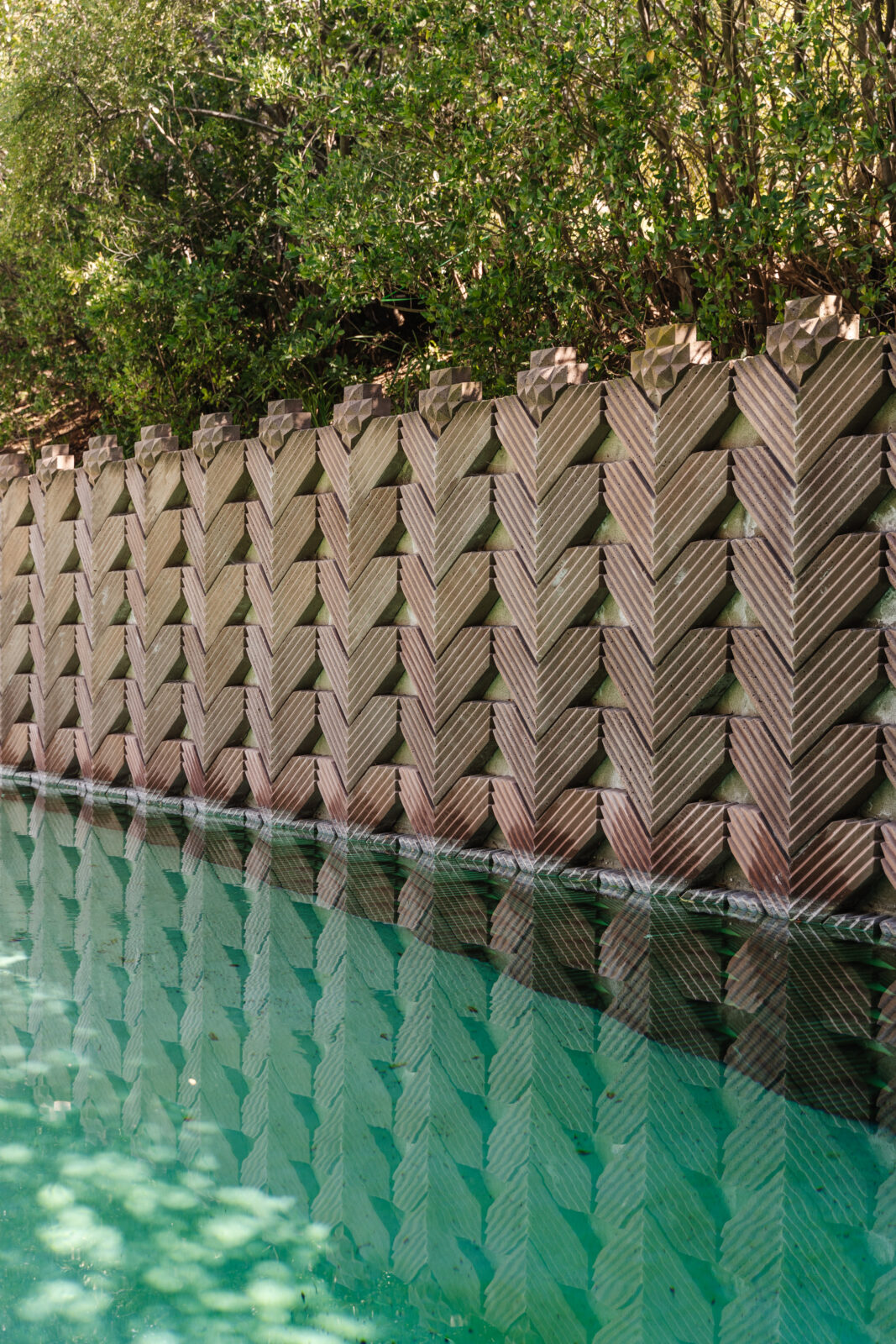
Just outside, the rectangular swimming pool stretches across the courtyard, surrounded by a wide concrete deck with space for loungers and outdoor seating.
Tall trees and landscaping rise beyond the walls, creating a quiet backdrop around the pool area.
Additional Structures
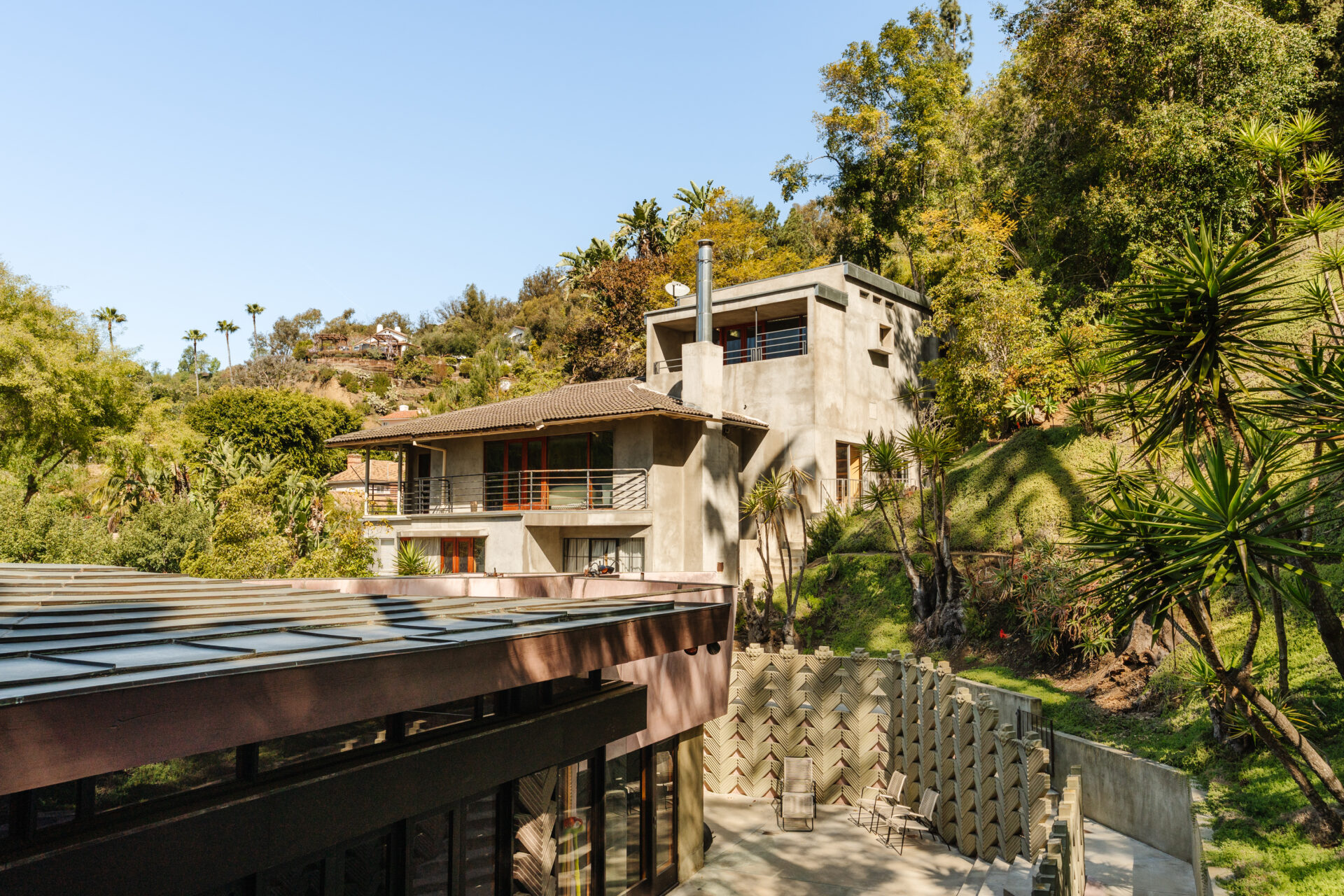
Right beside the well-known pink Beverly Johnson House sits another notable property, the headquarters of David Lynch’s production company, Asymmetrical Productions.
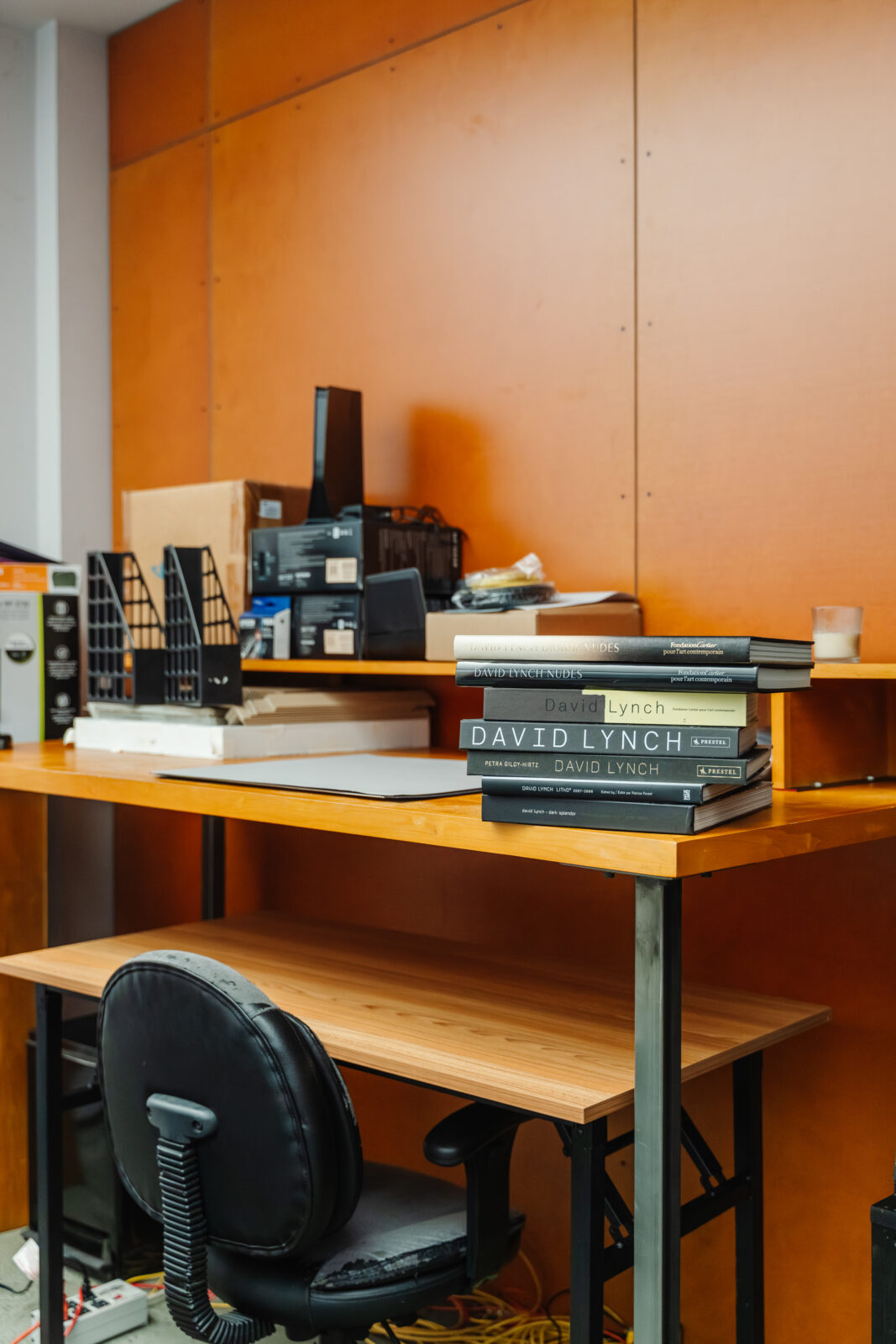
Additional structures also include his personal studio, a two-story guesthouse, and a minimalist one-bedroom dwelling designed in smooth grey plaster, reflecting Lynch’s distinct design style.
A Closer Look at The Architecture
Already seen throughout many spaces and by far one of the most striking elements of the home is its use of patterned concrete blocks, a hallmark of Lloyd Wright’s style.
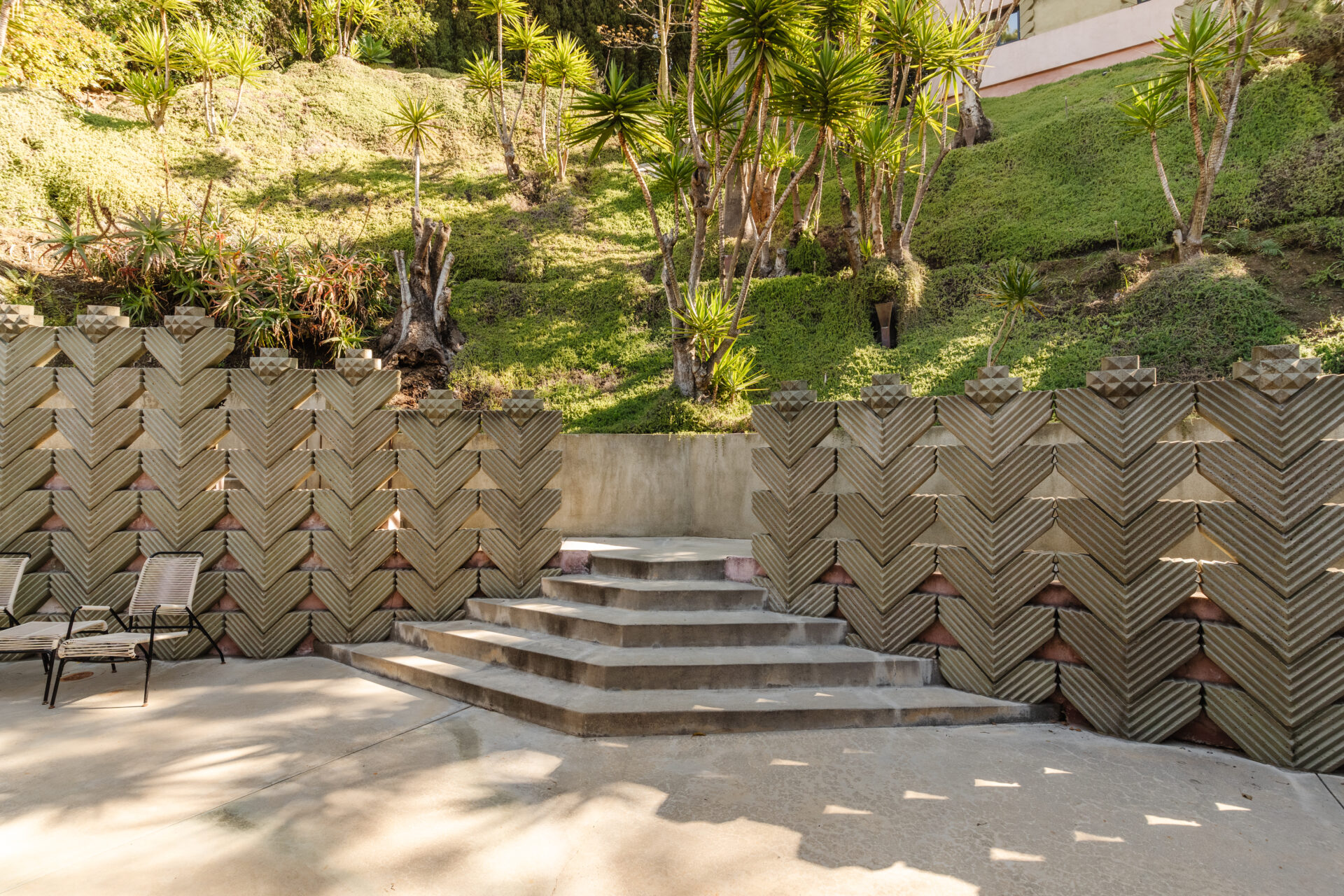
These repeating chevron blocks frame key features like the pool, fireplaces, and hillside walls, transforming them into living canvases where light and shadow shift throughout the day.
Final Thoughts
Stretching across 2.3 acres and five parcels, David Lynch’s estate reflects decades of creative transformations, combining midcentury design with the artistic identity of one of Hollywood’s most distinctive filmmakers.
Over those years, the property served as both a private residence and a place where Lynch could unwind, think, and create.
Now sold for $13 million and off the market, the compound offers its next owner the chance to take over a home that holds a unique place in Los Angeles’ architectural and cultural landscape.