Frank Sinatra’s LA Bachelor Pad Sells For $6.75 Million
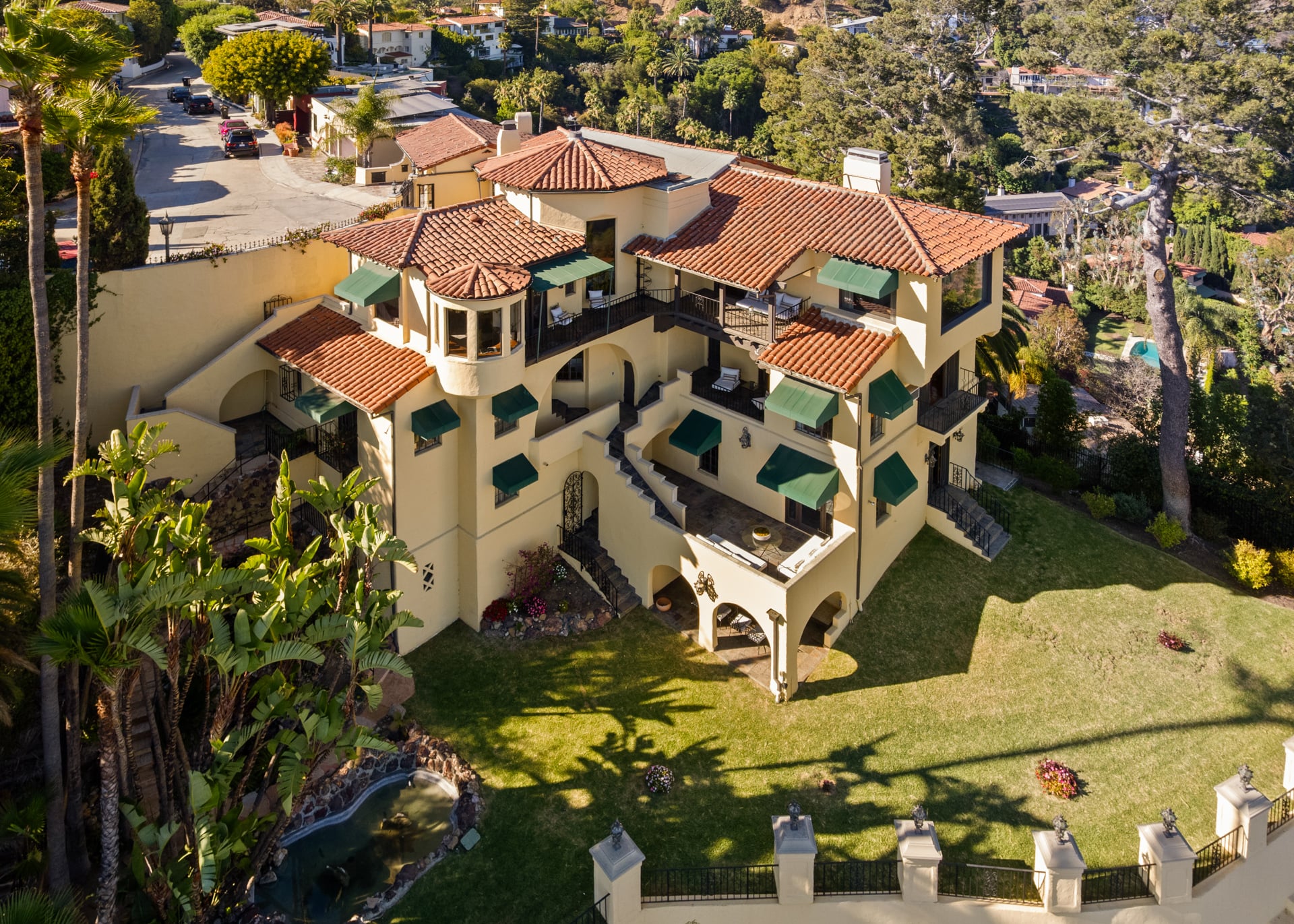
The former Los Angeles bachelor pad of Frank Sinatra, known as Villa Dorada, has been sold for $6.75 million, marking its first public sale in 53 years.
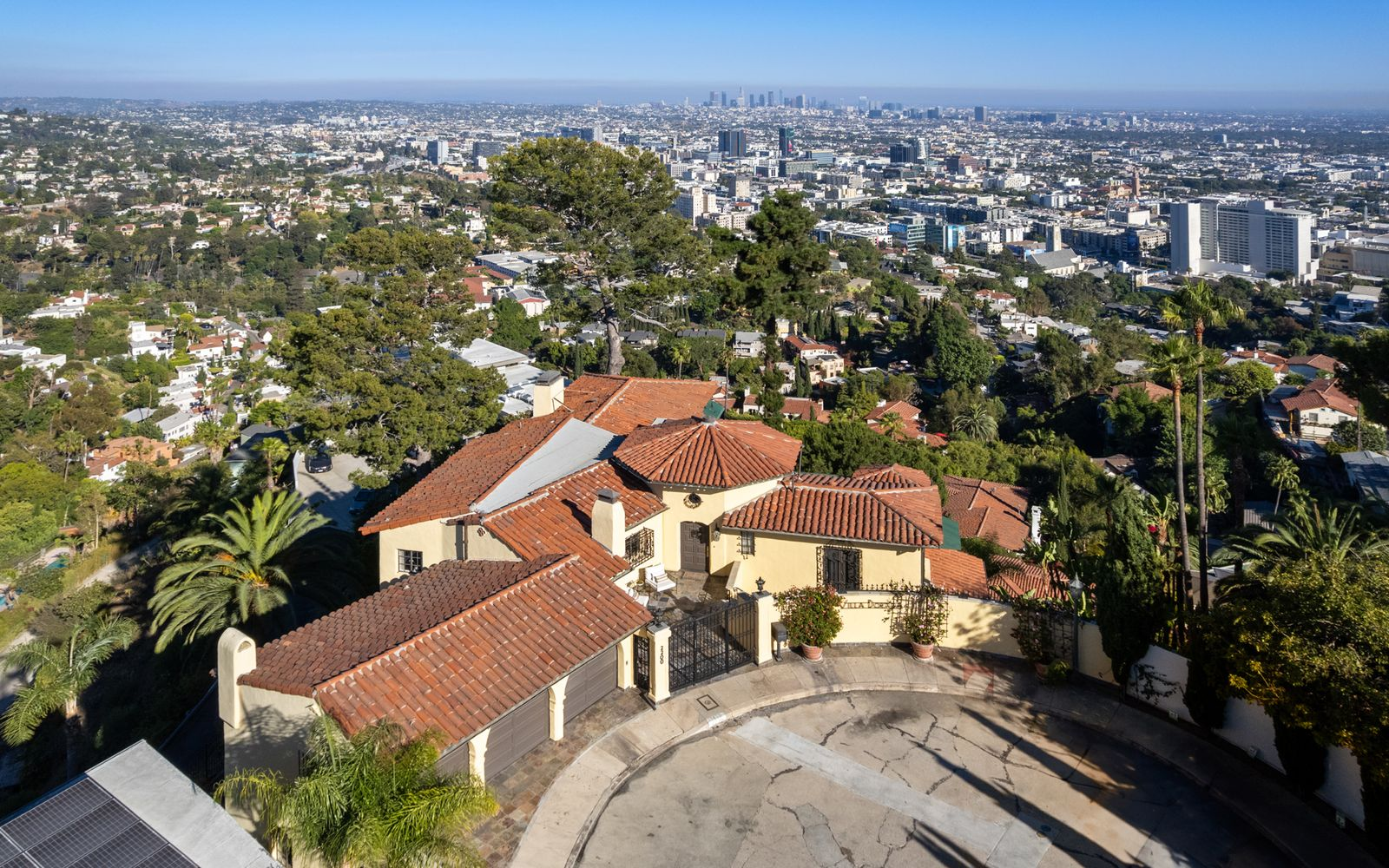
The 6-bedroom, 7-bath Spanish Revival estate was listed for $7 million and is approximately 7,400 square feet and sits within the legendary Outpost Estates.
Over the decades, Villa Dorada welcomed an impressive roster of Hollywood legends, including Bela Lugosi, the original Dracula, Oscar-winning songwriter Jimmy Van Heusen, and Bing Crosby.
During the height of his Hollywood years, it was said that Sinatra shared the home with Van Heusen, cementing its reputation as one of the era’s most iconic bachelor pads.
Property Highlights
Price: $6.75 million
Location: Los Angeles, California
Size: 7,400 square feet
Bedrooms: 6
Bathrooms: 7
Notable Features: 1929 Spanish Revival architecture, sweeping city-to-ocean views, preserved magnesite floors, wood-paneled elevator, original intercom system and telephone room, lower-level ballroom with fireplace, built-in bar, multiple terraces, two-bedroom staff quarters, three-car garage
For more information about the sale, reach out to Tom Davila at tom.davila@compass.com, John Zaffarano at john.zaffarano@compass.com, or Kennon Earl at Kennon.Earl@compass.com from Rare Properties at Compass.
Walking up to Sinatra’s Bachelor Pad
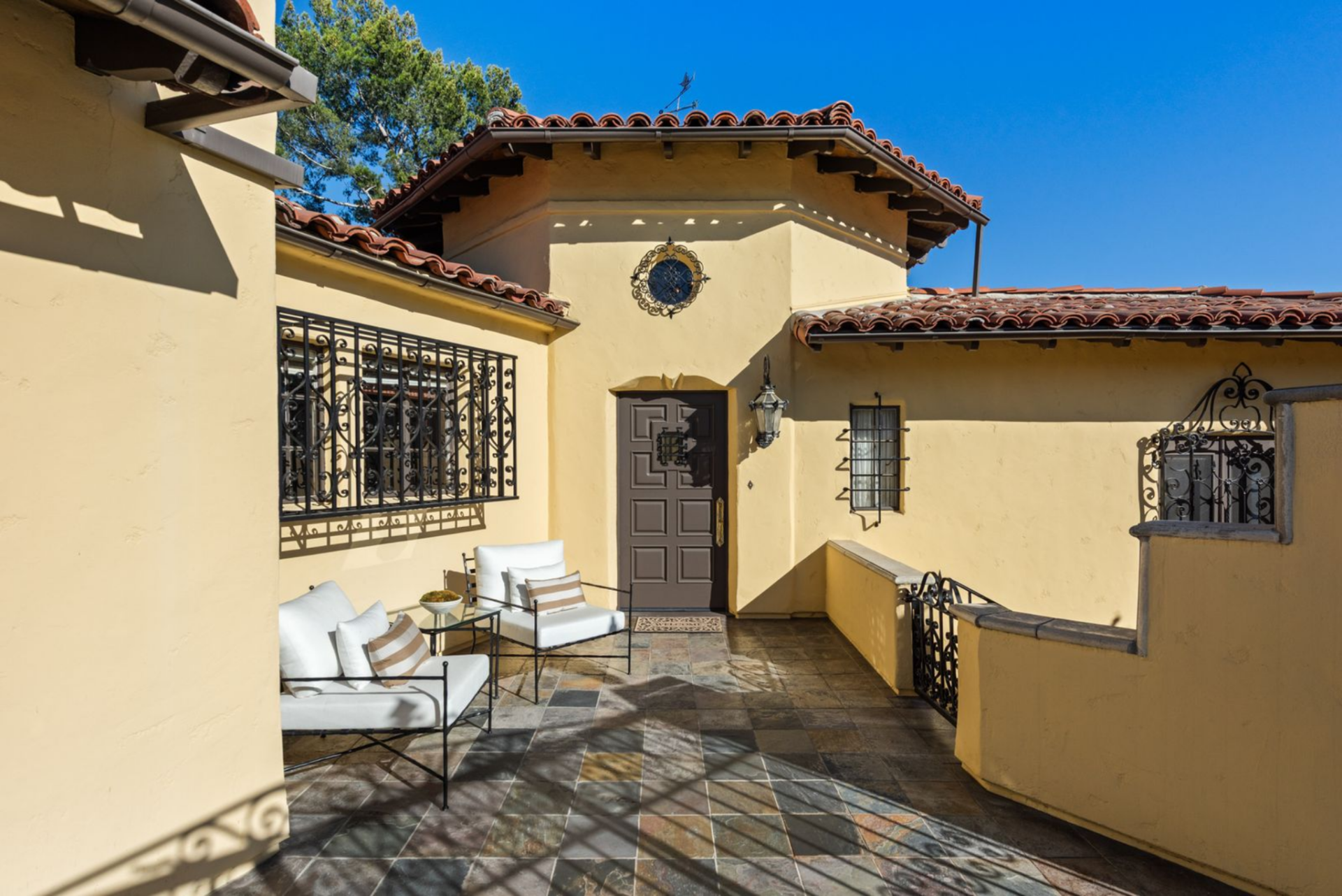
Built in 1929, Villa Dorada remains a preserved example of Spanish Revival architecture, its butter-yellow stucco walls, red clay tile roof, and wrought-iron detailing still sharply defined against the blue sky.
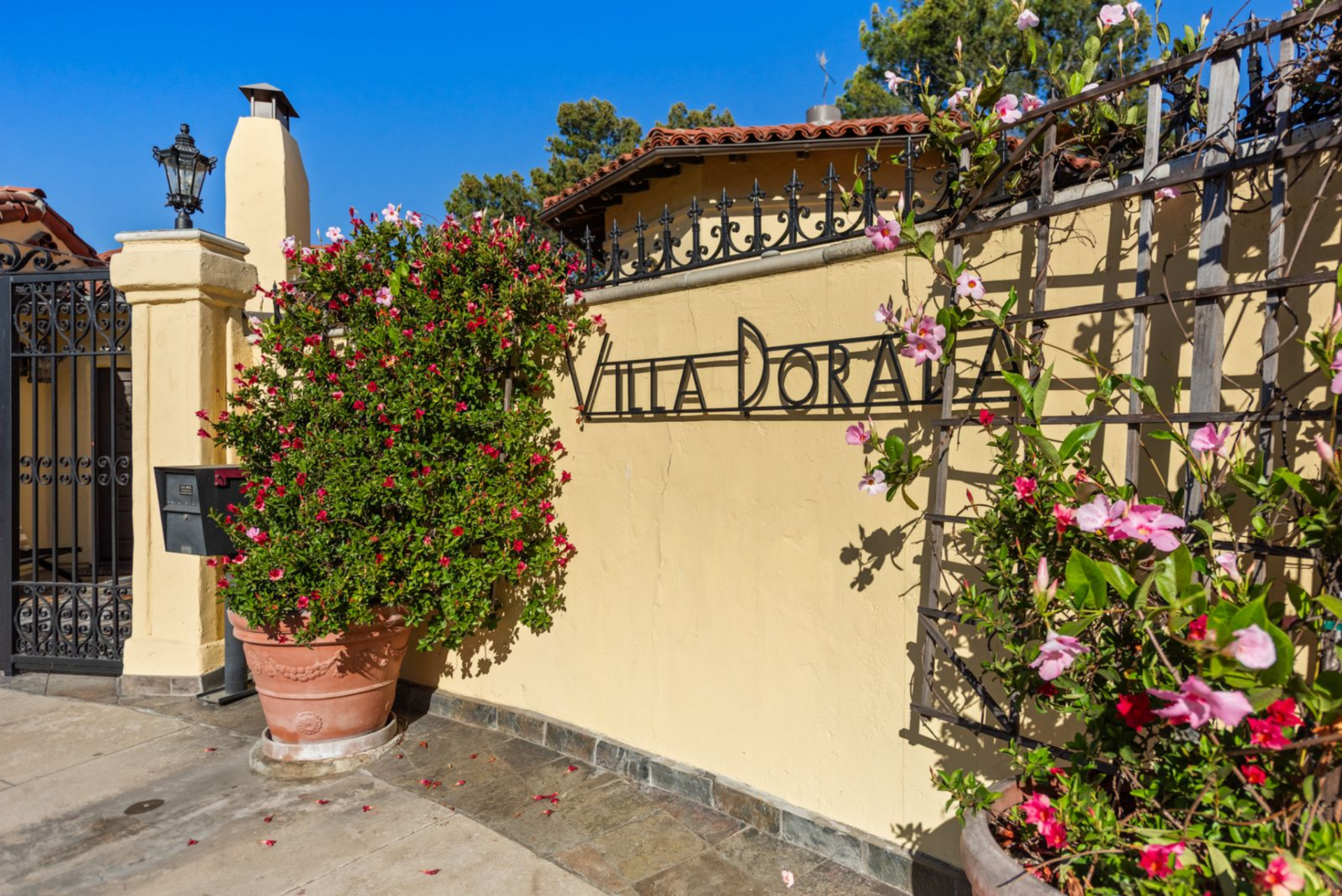
Set on a rare flat cul-de-sac, the approach is private and calm, framed by iron gates, flowering vines, and potted greenery that soften the formal façade.
As you pass the gate and step onto the tiled entry terrace, you’ll see that iron grilles guard the windows surrounding a carved wooden door that sits within a modest tower.
Step-Down Parlor
Inside and just off the entry, a step-down parlor creates a subtle sense of separation, its lowered floorline and curved walls making the room feel tucked away.
Original wood trim frames the space, while striped drapery and wrought-iron details echo the Spanish Revival architecture seen outside.
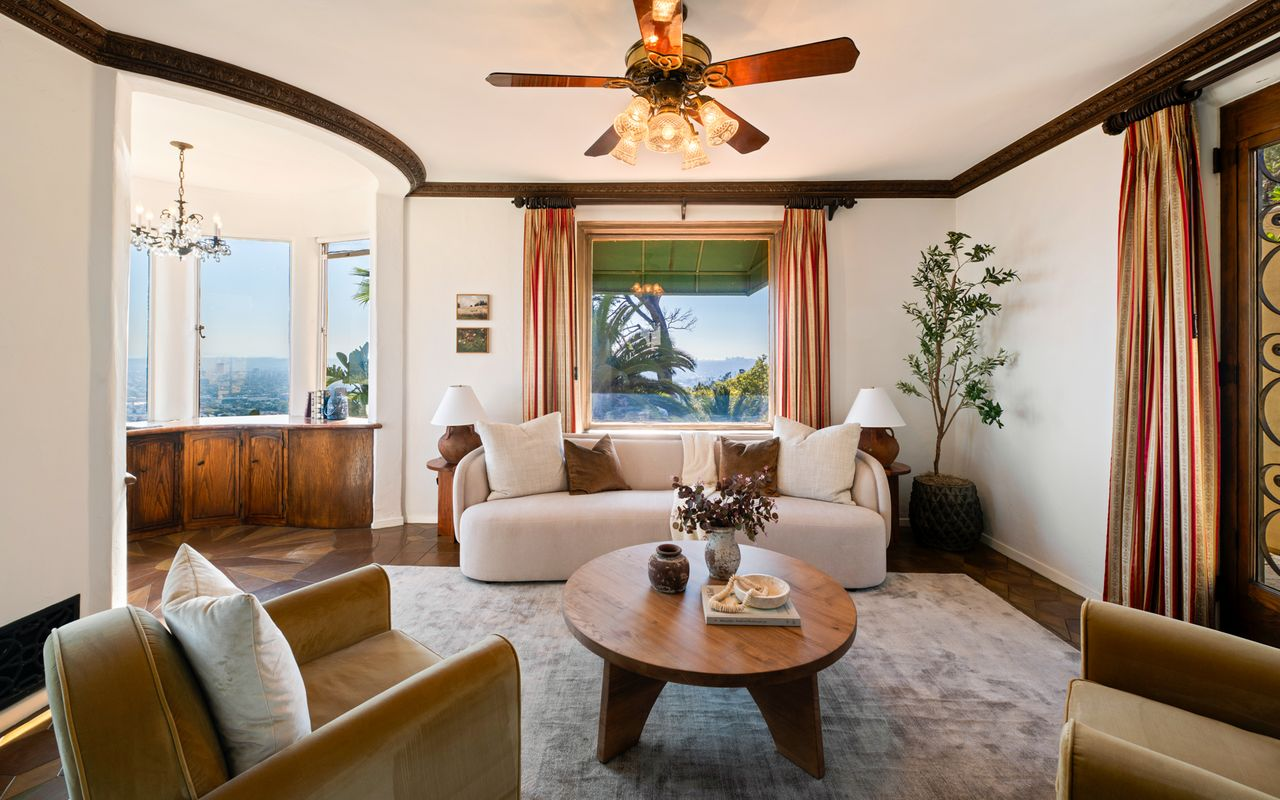
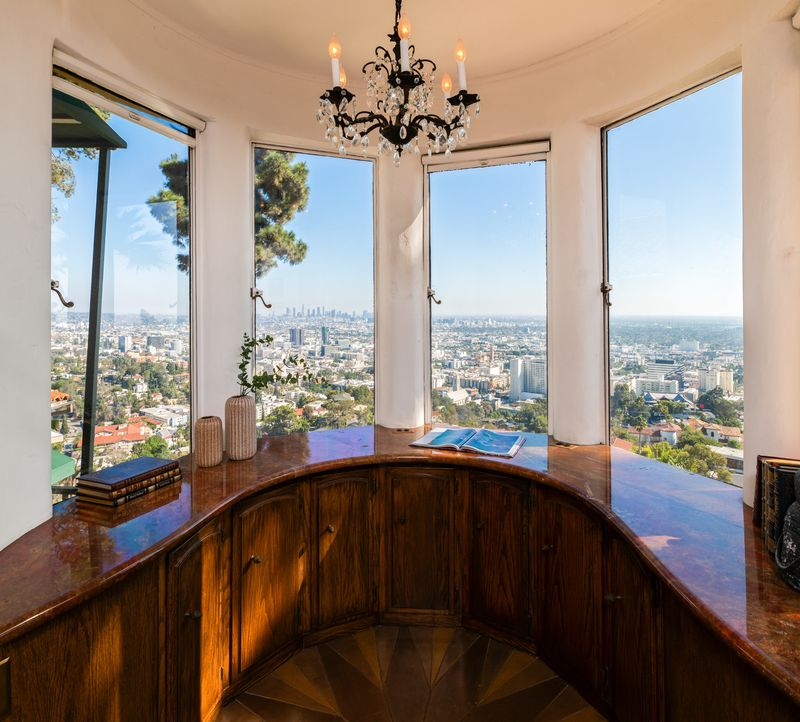
A built-in bar sits in the corner of the parlor, its cabinetry rich and polished, positioned to serve guests without disrupting the flow of conversation.
With city views stretching beyond the windows and warm lamplight pooling across the room, it’s easy to picture late nights here, cocktails poured, music playing, and Sinatra holding court.
Living Room
The living room unfolds as a long, rectangular space across magnesite floors and exposed ceiling beams that run the length of the room.
Along one wall, a tiled fireplace with an intricate patterned surround acts as a focal point, framed by a carved wood mantle and period lighting.
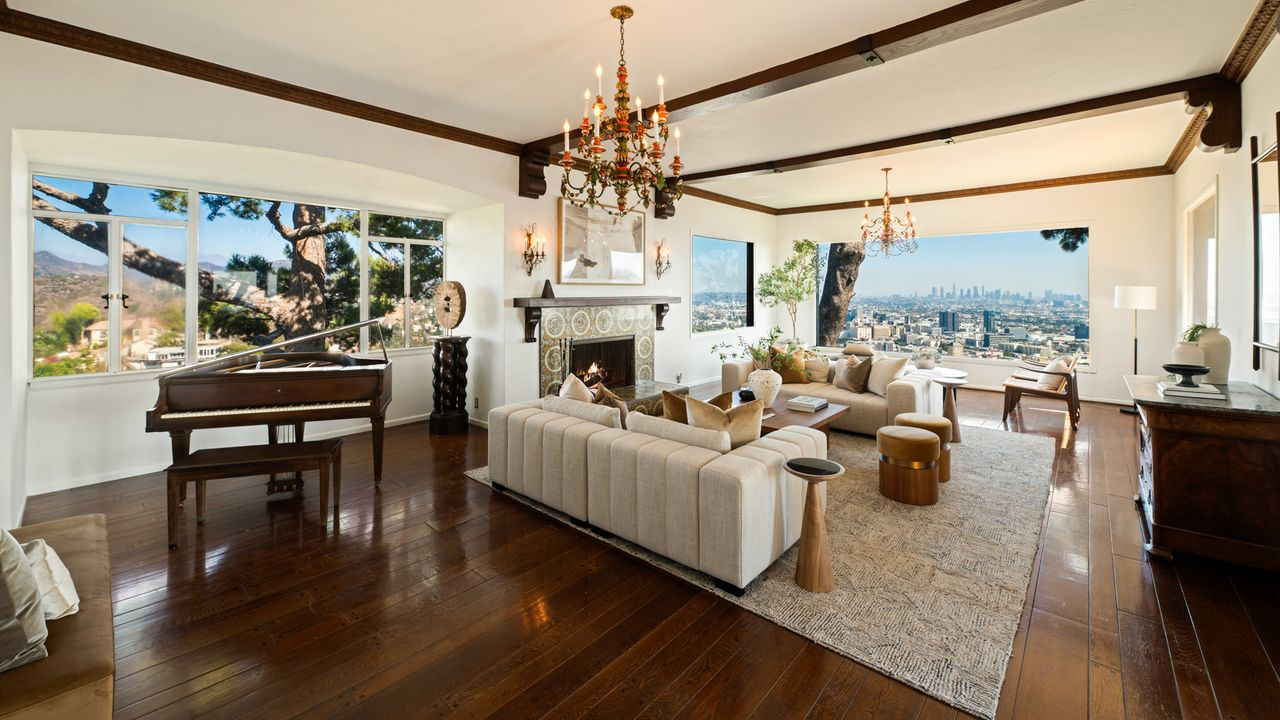
Seating is arranged centrally, with a pair of sofas facing one another across a wood coffee table, creating a defined conversation zone atop a neutral woven rug.
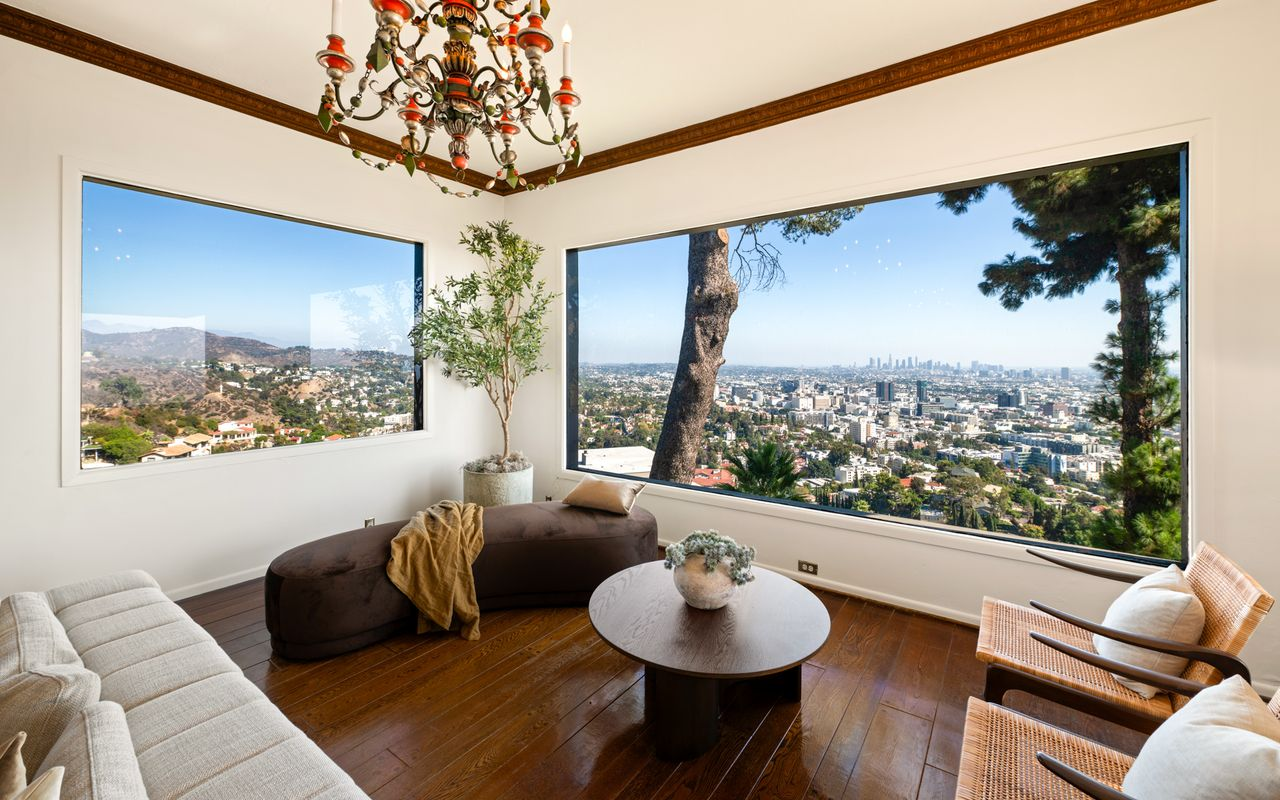
To one side, a baby grand piano occupies its own corner, while at the far end, oversized picture windows frame a sweeping city view.
Formal Dining Room
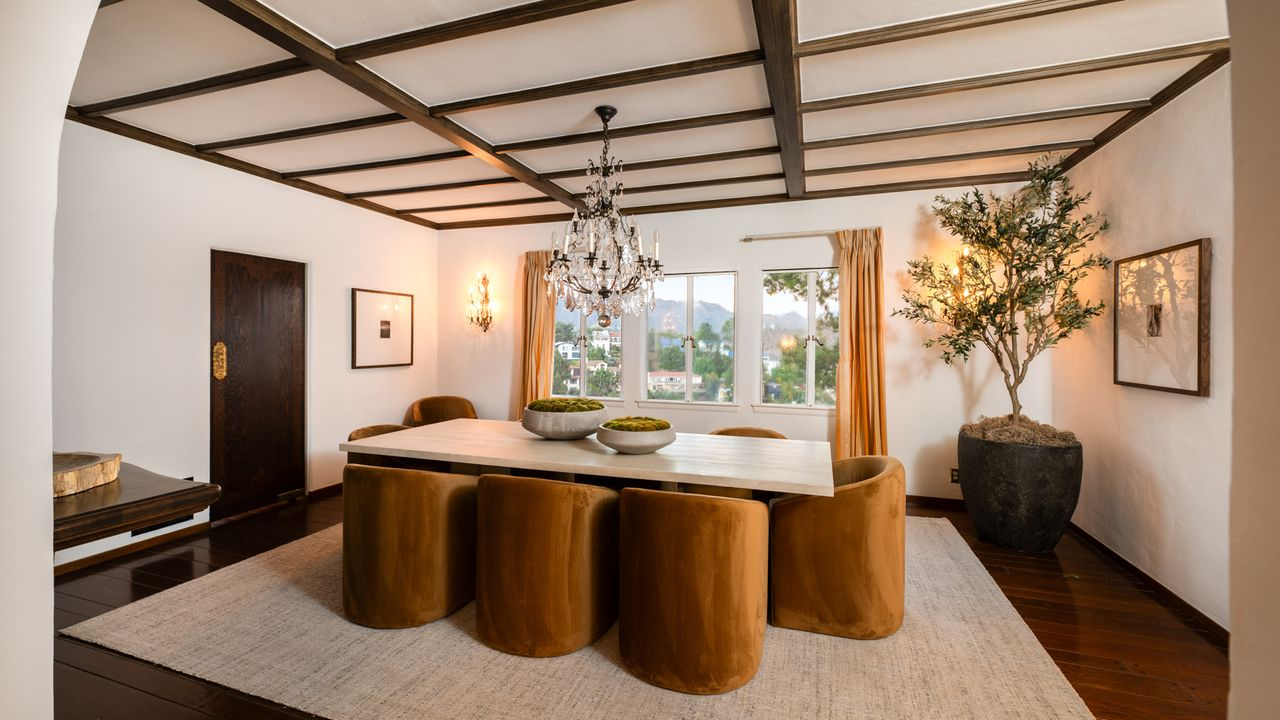
Up a few steps from the living room, the formal dining room features a long, rectangular dining table surrounded by upholstered barrel chairs that soften the room’s architectural lines.
Primary Suite
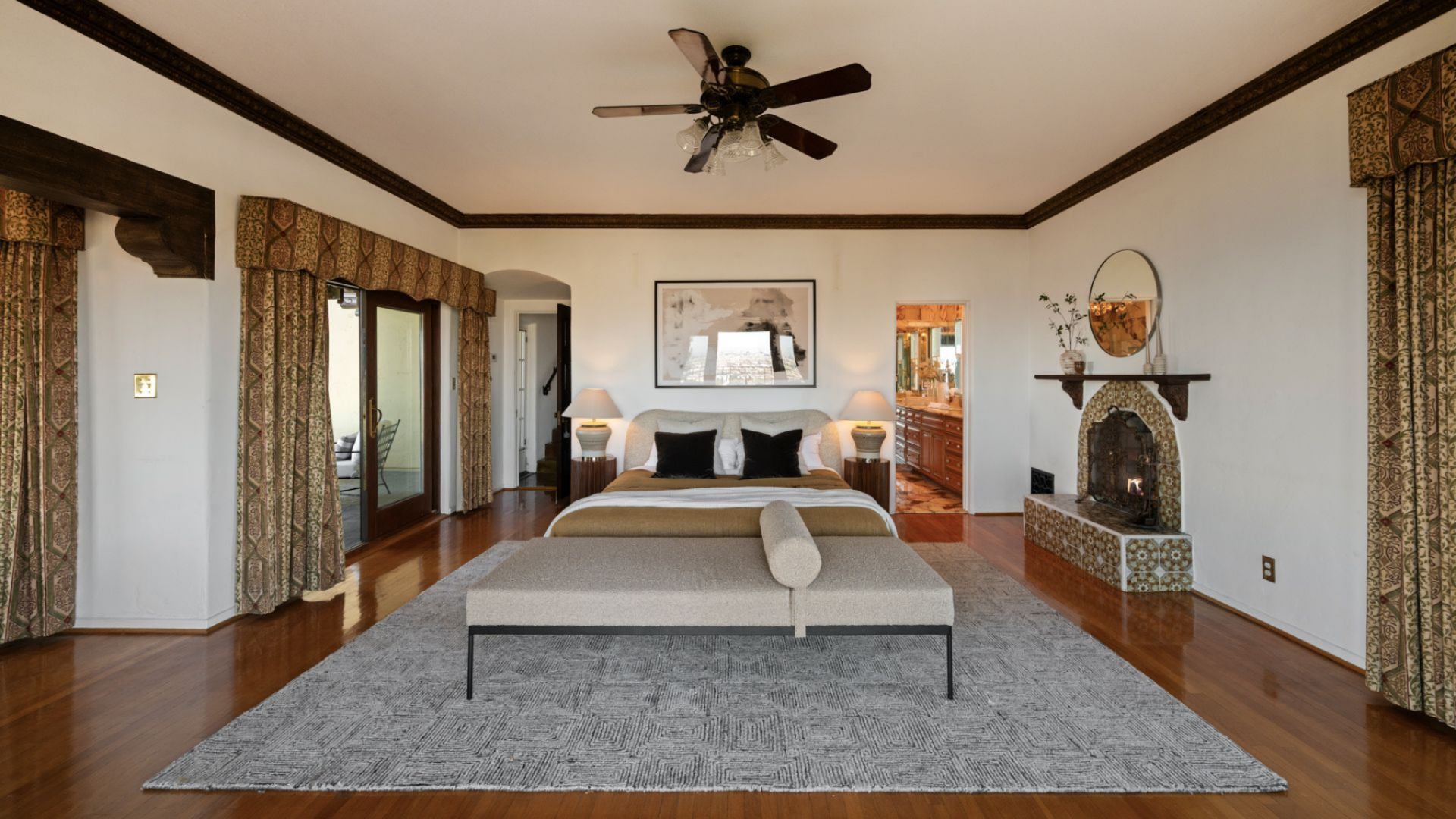
The home’s primary suite occupies a broad space, arranged with the bed centered against the main wall right next to the suite’s bathroom.
A patterned tile fireplace sits off to one side of the bed, its arched opening and carved wood mantel another example of the Spanish Revival design.
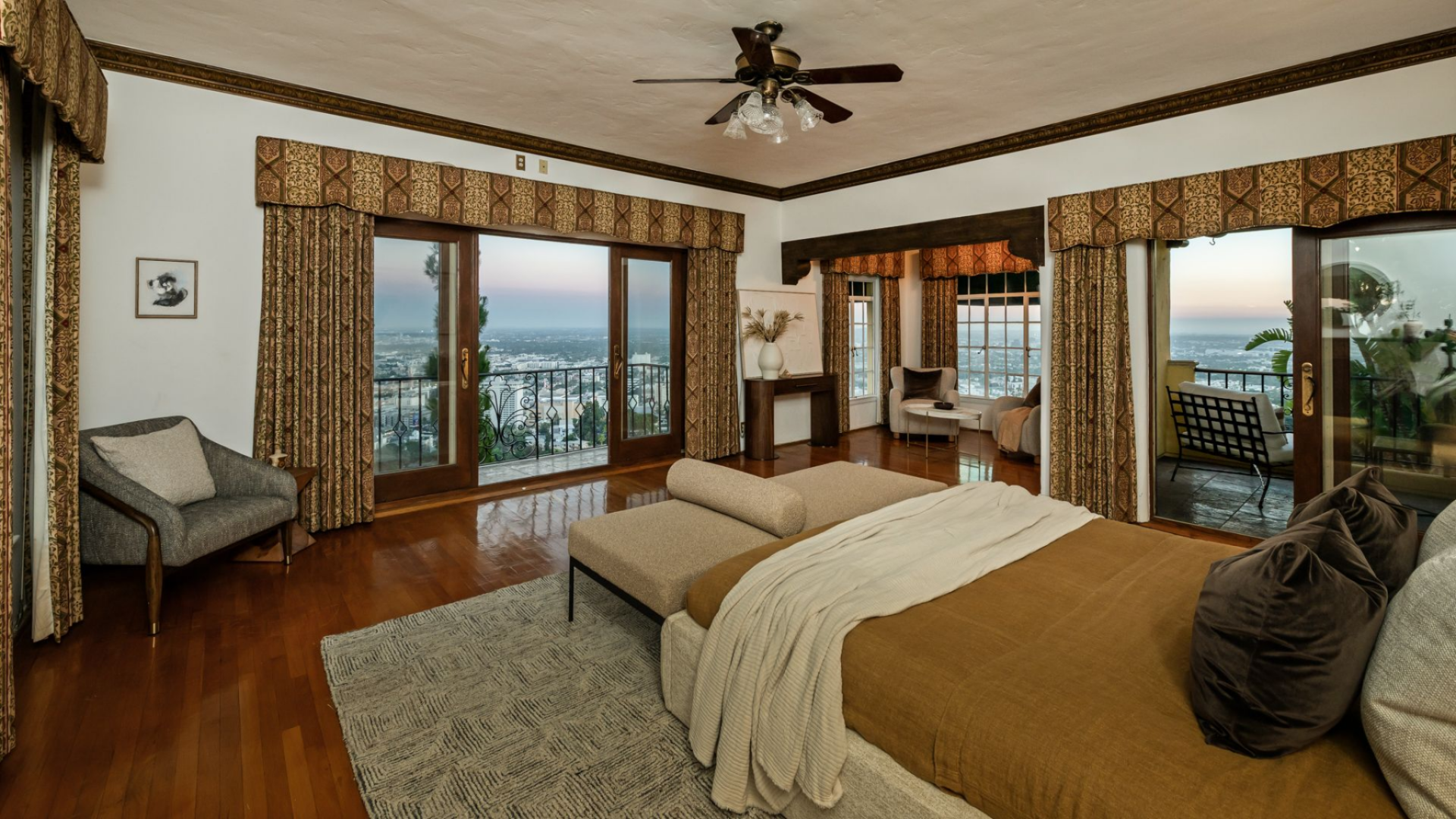
Across two walls, French doors open directly to two different balconies, extending the suite outward, while an indoor sitting area is positioned between them, creating another lounge option.
Additional Bedrooms
Beyond the primary suite, two additional bedrooms introduce distinct designs, each defined by its materials, layout, and connection to the outdoors.
The Patterned Alcove Bedroom
This room is organized around a recessed sleeping niche wrapped in bold, patterned fabric that extends across the walls and upholstered headboard.
The platform base, finished in a deep red tone, elevates the sleeping area above a geometric tile floor of earth-toned shapes.
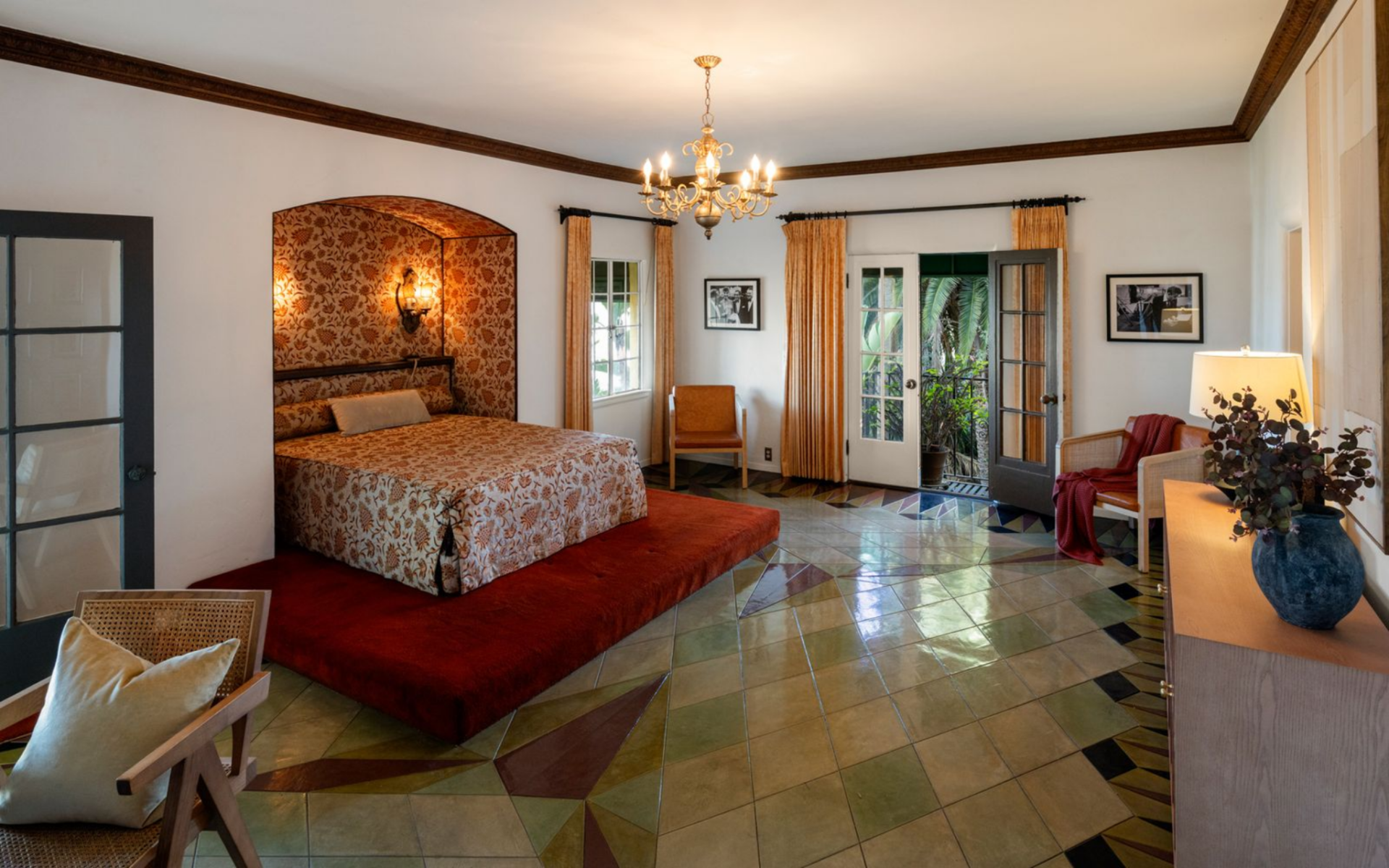
French doors line both sides of the room, opening directly to a garden terrace and bringing greenery into view.
The Hillside View Bedroom
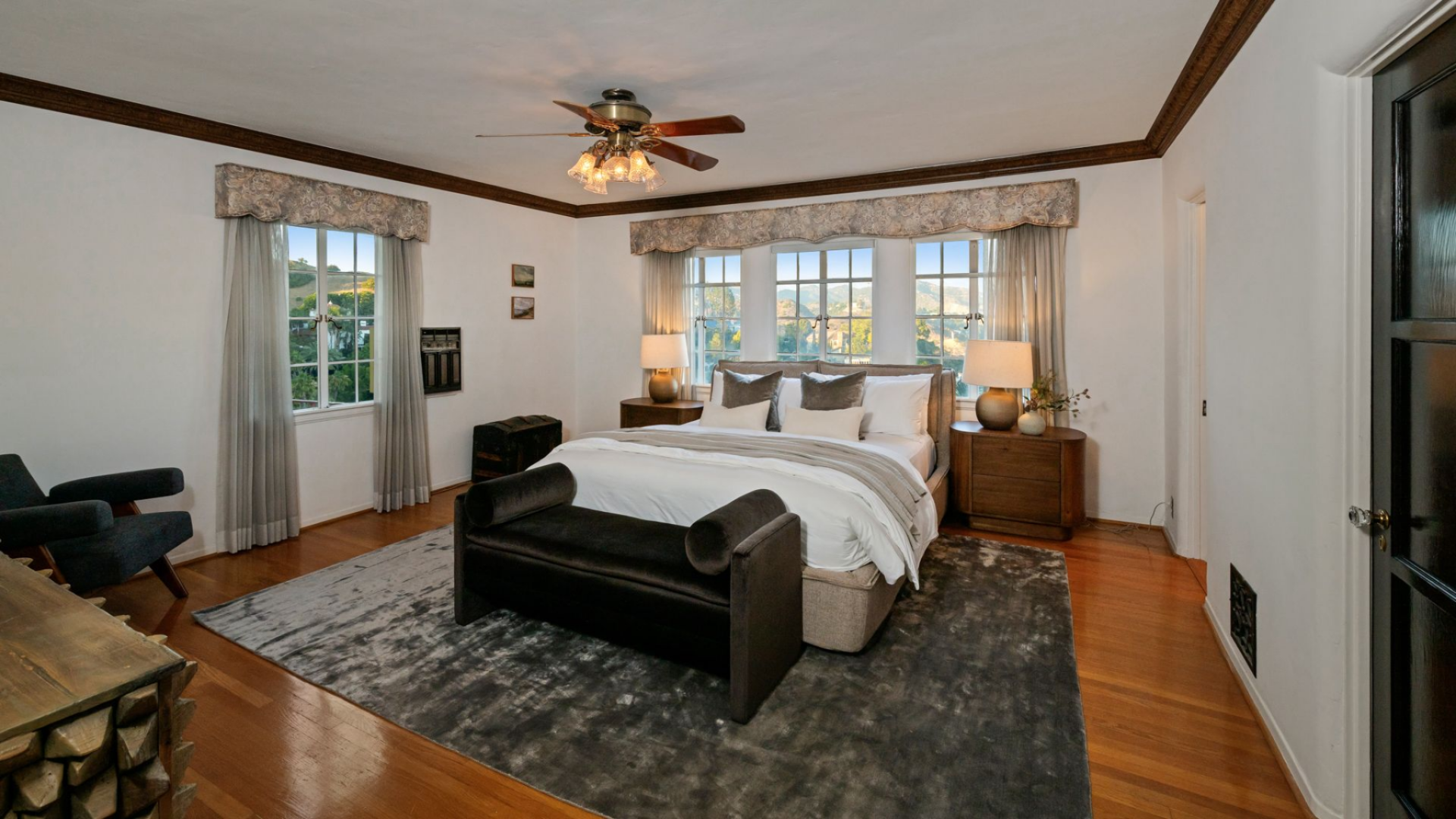
The second bedroom takes a more traditional approach, with the bed centered beneath a trio of windows that overlook the surrounding hills.
Matching wood nightstands and table lamps create symmetry along the back wall, while soft drapery frames each window without obstructing the sightlines.
Lower-Level Ballroom
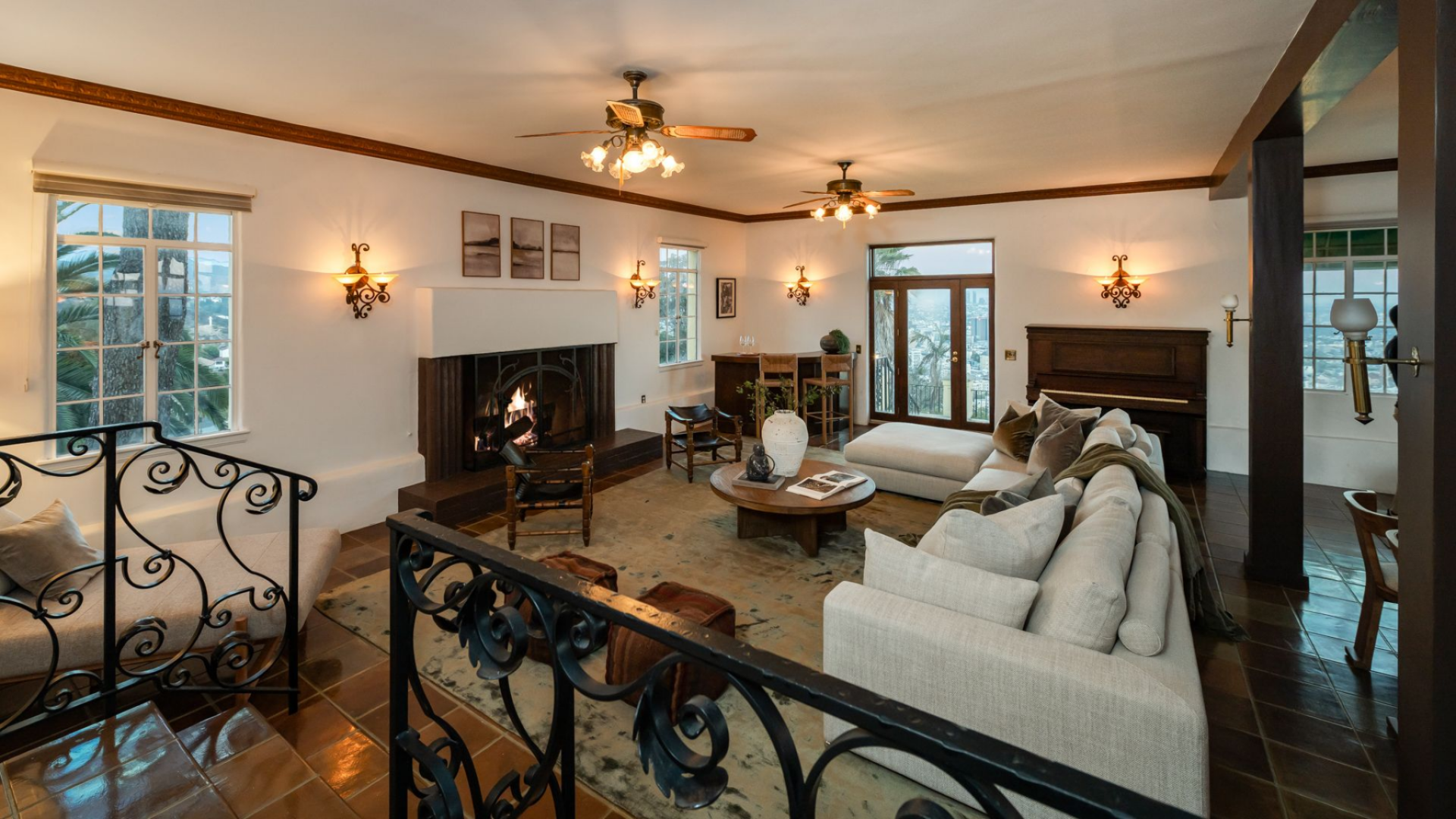
The lower-level ballroom unfolds around an oversized fireplace set into a thick plaster surround. The hearth is framed in dark wood, with a raised platform extending along the base, giving the fireplace weight against the long white wall.
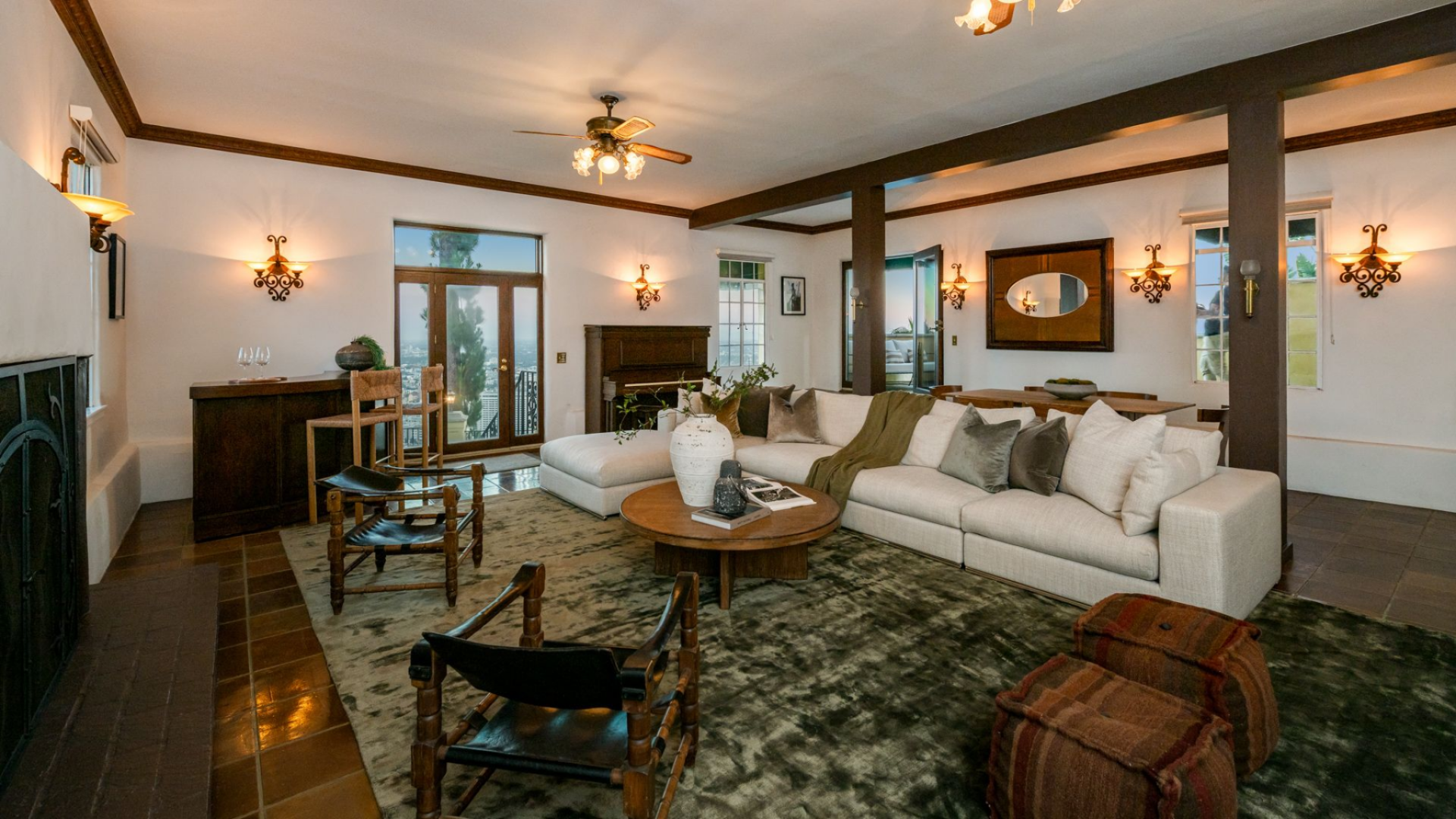
At the center of the room, a large sectional and a round wood coffee table define the main seating area, positioned to face both the fireplace and the exterior doors.
A built-in bar lines one side near a glass door, while a dining table is placed behind the couch, creating a natural transition between lounging and entertaining.
Outdoor Lawn
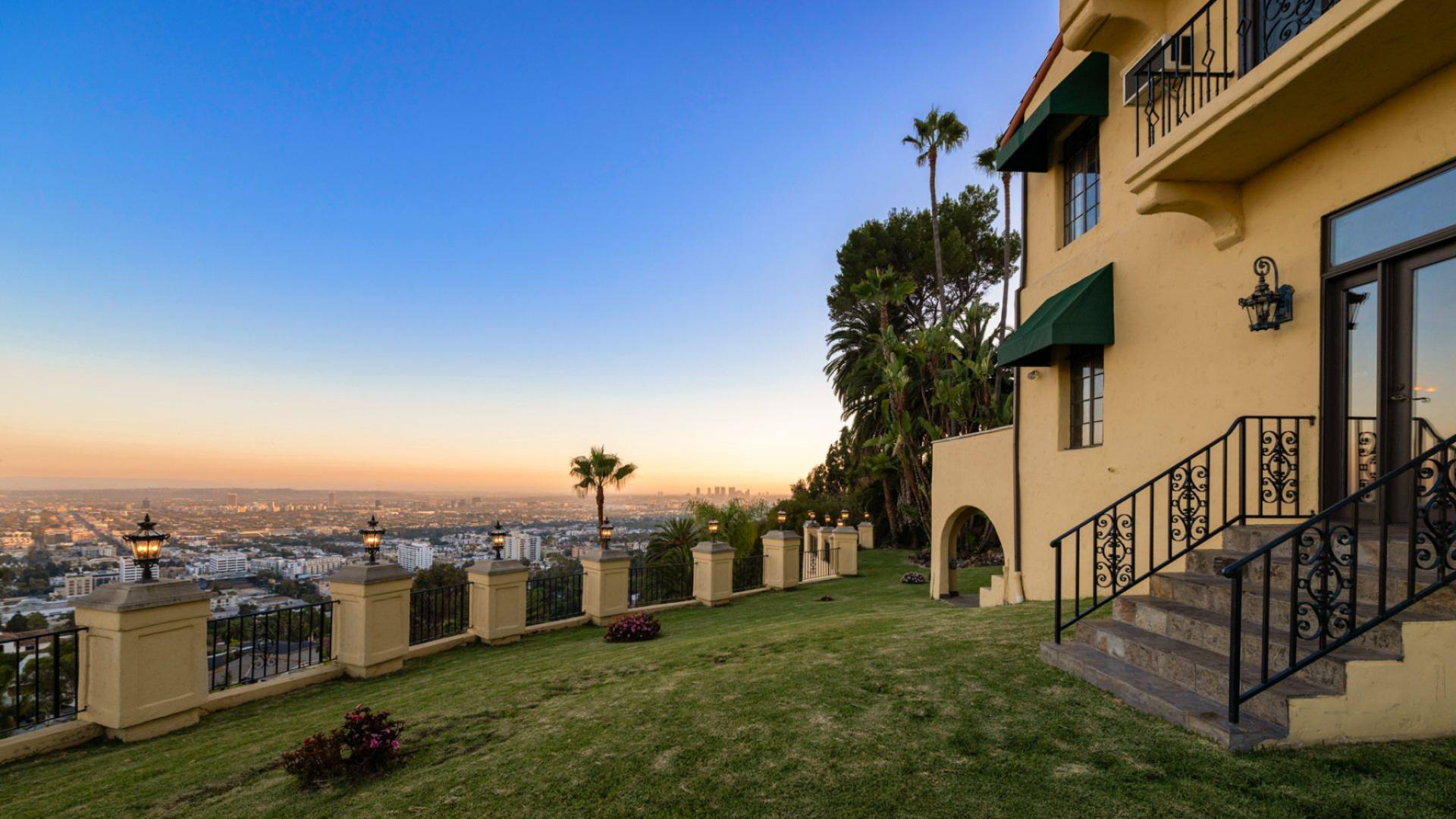
The full-height glass doors from the ballroom open directly to the backyard, where a stretch of lawn meets a balustrade overlooking the Los Angeles skyline.
Final Thoughts
Taken as a whole, the residence bridges two distinct eras of Los Angeles living. Original details, patterned tile fireplaces, and hand-carved wooden doors anchor the home in the glamour of Hollywood’s Golden Age.
At the same time, updated furnishings introduce a cleaner, more modern edge that aligns with how spaces are used today.
That balance allows the property to preserve the character and stories embedded within its walls while functioning for contemporary living and large-scale entertaining.